

What’s Happening With The BWCA?
July 17, 2025 4:22 pmDetails on the current threats, both legislative and administrative, to Boundary Waters protections. Stay tuned for more information and actions you can take as these threats to the BWCA progress.
FY 2026 Interior-Environment Appropriations:
The initial House version of the FY 2026 Interior-Environment Appropriations Bill included language that returns mineral leases in the Superior National Forest to Twin Metals on page 191, section 445. The language states:
“Notwithstanding any other provision of law and not subject to further judicial review, not later than 30 days after the date of the enactment of this Act, the Secretary of the Interior shall reinstate the hardrock mineral leases in the Superior National Forest in the State of Minnesota issued in 2019 and identified as MNES-01352 and MNES-01353.”
This language was removed from the Senate version and is no longer included in the bill.
Representative Pete Stauber (MN-R-08):
Rep. Stauber has introduced two bills in the U.S. House of Representatives in 2025 that threaten the BWCA.
(1) H.R. 978, which is still sitting in committee, would undo the 20-year mining moratorium in the Rainy River Watershed of the Superior National Forest, return mineral leases to Twin Metals MN, a subsidiary of Chilean mining conglomerate Antofogasta, and prohibit judicial review of those actions.
(2) H.R. 4090, which seeks to codify several of President Trump’s executive orders as they pertain to hardrock mining, would solicit industry feedback on regulatory bottlenecks and remove “undue burdens” that federal agencies place on mineral development. The majority of these “regulatory bottlenecks” and “undue burdens” will likely come from the permitting process and any adjustments made will seek to expedite environmental reviews, further endangering the Boundary Waters to degradation.
Department of Interior Releases Legal Opinion that Could Help Twin Metals Gain Leases Upstream from the BWCA
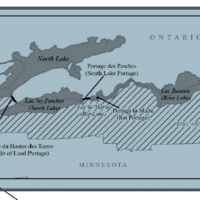
The Deputy Secretary of the Interior, Katharine MacGregor, has reinstated a legal opinion from 2017 with a key interpretation that will have a significant impact on Twin Metal’s plan to mine for non-ferrous minerals in the Rainy River Watershed.
SEE OUR BLOG ON THIS RECENT ACTION HERE
Rescinding the 20-year mineral withdrawal:
On June 11th, 2025, Secretary of Agriculture Brook Rollins announced that she intended to work with the Department of Interior to reverse the 20-year mining moratorium in the Rainy River Watershed within the Superior National Forest. This was later confirmed during a House Committee on Natural Resources hearing with Secretary of the Interior Doug Burgum. While a good-faith public comment period may be made available for this decision, it is unlikely to sway their decision.
With the moratorium in place, any legislation returning mining leases to Twin Metals is obsolete, but we expect the moratorium to be lifted administratively in the near future. Despite this knowledge, SFBW intends to engage as many partner organizations and outdoor industry businesses as possible to submit public comments during any available comment period.
If the administration takes the path of a Categorical Exclusion (CATEX), there will likely be no public input period for the decision to rescind the moratorium. A categorical exclusion is a category of actions that a federal agency has determined, based on National Environmental Policy Act (NEPA) procedures, which the Trump Admin already moved to loosen earlier this year, generally does not have a significant effect on the human environment. Due to that determination, neither a new environmental assessment (EA) nor an environmental impact statement (EIS) would be required for actions within that decision. Essentially, a categorical exclusion allows federal agencies to expedite projects that are unlikely to cause significant environmental harm, saving time and resources while still complying with the new NEPA Regulations.
Earlier this year, when the administration moved to alter oversight of the NEPA process, they offered a public comment period with the caveat that public opinion would not sway their decision. To put it another way, public sentiment has not been a factor in this administration’s decisions on environmental policy and protections for special places, even if comment periods are being made available.
White House:
As we continue to see the directives in President Trump’s Executive Orders from earlier this year play out, including but not limited to “Unleashing American Energy” and “Immediate Measures to Increase American Mineral Production” we are paying close attention to their implications toward the Twin Metals project. We are particularly concerned with his directives to:
(1) Identify all agency actions that impose undue burdens on the domestic mining and processing of non-fuel minerals and undertake steps to revise or rescind such actions.
(2) Reassess any public lands withdrawals for potential revision.
(3) Place a 50% tariff on imported copper, significantly increasing the urgency to produce it domestically.
(4) Rescind state laws that impede energy development.