

2025 Boundary Waters Policy & Legislative Updates
February 27, 2025 12:26 pmupdated July 17th, 2025
The latest information on Twin Metals at the federal and state levels and actions you can take to defend the BWCA. Sportsmen for the Boundary Waters will update this blog throughout the year with new information and as new announcements are made.
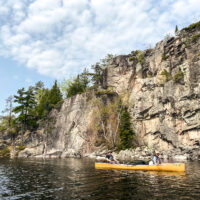
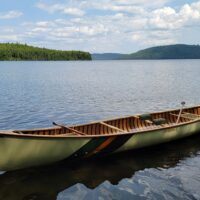
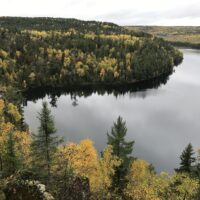
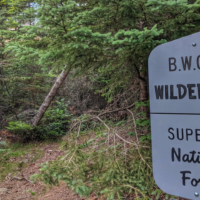
Since 1964, the Boundary Waters has been a federally designated Wilderness Area. In 1978, the Boundary Waters Canoe Area & Wilderness Act expanded the wilderness to the nearly 1.1 million acres that it is today. This designation has prevented development in this pristine expanse of interconnected lakes and streams, as well as set forth rules and regulations that control recreational use practices, adding to the region’s Wilderness character.
Currently, the Boundary Waters Canoe Area Wilderness (BWCAW) retains its Wilderness designation, which prevents any development within the Wilderness boundary. Just outside that boundary, however, there is a mining proposal directly upstream in the Rainy River Watershed.
Twin Metals, a subsidiary of the mining company Antofagasta, has proposed developing an underground sulfide-ore copper/nickel mine near the shores of Birch Lake to draw minerals from the Maturi Deposit, which is part of the larger Duluth Complex Deposit of Northeast Minnesota. This type of mining, despite several modern advancements in recent decades, still poses a significant environmental threat to the region, as well as the potential to impair the intact outdoor recreation economy that helps sustain the region’s communities.
During the Biden Administration, Secretary of the Interior Deb Haaland signed a 20-year moratorium that would prevent non-ferrous mining on over 225,000 acres in the Superior National Forest within the Rainy River Watershed. This moratorium was a massive step towards permanently protecting the Boundary Waters from non-ferrous mining, but it is extremely likely to be overturned during the Trump Administration.
Sportsmen for the Boundary Waters and much of the conservation community saw this coming. While campaigning for the Presidency, Donald Trump ran under the motto “Drill baby, drill!”. Specifically, he promised Minnesotans that he would “Make the Iron Range great again” by undoing the Superior National Forest mining moratorium. Beyond getting rid of the moratorium, we fully expect significant changes to the permitting process, the designated critical minerals list, and a significant push to produce such minerals domestically.
Key Players
Here are some of the key players in this issue and the ways in which we expect them to try and push this project forward:
FEDERAL
President Donald Trump has signed a number of Executive Orders that pertain to the conservation community. Most significant among them, as far as the Boundary Waters are concerned, is “Unleashing American Energy”.
This executive order, signed by Donald Trump on January 20th, bears some concerning language regarding mineral extraction in Section 9, including:
(a) The Secretary of the Interior, Secretary of Agriculture, Administrator of the EPA, Chairman of CEQ, and the heads of any other relevant agencies, as appropriate, shall identify all agency actions that impose undue burdens on the domestic mining and processing of non-fuel minerals and undertake steps to revise or rescind such actions.
(b) The Secretaries of the Interior and Agriculture shall reassess any public lands withdrawals for potential revision.
(c) The Secretary of the Interior shall instruct the Director of the U.S. Geological Survey to consider updating the Survey’s list of critical minerals, including the potential of including uranium.
(d) The Secretary of the Interior shall prioritize efforts to accelerate the ongoing, detailed geologic mapping of the United States, with a focus on locating previously unknown deposits of critical minerals.
(e) The Secretary of Energy shall ensure that critical mineral projects, including the processing of critical minerals, receive consideration for Federal support, contingent on the availability of appropriated funds.
(g) The Secretary of Commerce shall assess the national security implications of the Nation’s mineral reliance and the potential for trade action.
(i) The Secretary of Defense shall consider the needs of the United States in supplying and maintaining the National Defense Stockpile, review the legal authorities and obligations in managing the National Defense Stockpile, and take all appropriate steps to ensure that the National Defense Stockpile will provide a robust supply of critical minerals in the event of a future shortfall.
President Trump has also signaled his intent to significantly alter the National Environmental Protection Act (NEPA) process with the “Removal of National Environmental Policy Act Implementing Regulations.”
This new rule removes the Council on Environmental Quality’s (CEQ) overarching supervisory role over NEPA implementation, allowing each agency to rewrite its regulations. This new rule, despite offering a voluntary comment period, is likely to be enacted, regardless of public input.
While this new rule does not entirely eliminate the NEPA process, it may usher in a new era of how the United States implements NEPA. Looking ahead, we will closely monitor how various federal agencies implement NEPA without CEQ oversight and track legislation that alters the existing NEPA process.
President Trump has also made sweeping moves to gut the federal government, including employees of agencies like the United States Forest Service and Environmental Protection Agency. These already understaffed agencies that manage places like the Boundary Waters and projects that may impact them will likely struggle even more now with fewer staff and resources.
On March 20th, 2025, President Trump signed “Immediate Measures to Increase American Mineral Production.” This Executive Order invokes wartime powers for the president and a number of federal agency secretaries to identify significant mineral deposits on federal lands and, through federal funding and private industry input, designate mineral production as the official use of those federal public lands. This is an immediate threat to the Boundary Waters Canoe Area Wilderness and federal public lands at large. This action must be monitored very closely in the coming weeks and months to defend the places we cherish the most.
President Donald Trump has consistently demonstrated that economic development is the primary focus of his administration, regardless of the environmental costs. Through both executive and legislative means, public lands are under threat from development, and the Boundary Waters Canoe Area Wilderness is no exception.
A few key details of the Executive Order:
(a) Declare any substance, including existing classified critical minerals, worthy of special treatment or emphasis.
(b) Seek industry recommendations on how to expedite production.
(c) Use federal funds to support private mineral production.
(d) Clarify the treatment of waste rock under the 1872 mining law.
(e) Require the Secretary of the Interior to identify, in 10 days, federal lands with significant mineral deposits, and to prioritize mineral production on those lands by making mineral production their official “primary use”.
(f) Direct all land management secretaries to identify as many sites as possible that would be suitable for mineral production, and enter into extended use leases with private companies.
(g) Bestow the power of the President to the Secretary of Defense in order to advance the United States’ National Defense through mineral production.
(h) Bestow the power of the President to the CEO of the United States International Development Finance Corporation.
LEARN MORE & SUPPORT SFBW HERE
On August 1st, 2025, a 50% tariff will be imposed on non-domestic copper. This comes after a directive from the President for top US officials to look into the potential impacts of foreign reliance for the base metal. This is yet another move from the administration to further emphasize the need for domestic mineral extraction, giving more political and social clout to projects like Twin Metals.
United States Department of Energy | FAST-41 or “Fixing America’s Surface Transportation Act” is a program intended to help expedite projects that meet certain criteria, such as requiring a NEPA analysis, meeting an investment threshold, and not already qualifying for abbreviated environmental review. While Sportsmen for the Boundary Waters does not have an official stance on the NorthMet project owned by NewRange Copper/Nickel, we have taken note that their project has been selected for FAST-41 and will continue to monitor the implications of this and the possible use of FAST-41 to expedite the Twin Metals project, which we have been outspoken about opposing.
Congressman Pete Stauber (R-MN-8) represents the area where the mine is proposed and serves as the Chairman of the Energy and Mineral Resources Subcommittee. Representative Stauber has been an outspoken advocate for the Twin Metals project during his tenure, having introduced legislation to return their federal leases and fast-track the permitting process.
H.R 978 “The Superior National Forest Restoration Act” would Reinstate Twin Metal’s leases, undo the 20-year moratorium, and remove the possibility of judicial review of these decisions
CURRENT STATUS: Referred to House Committee on Natural Resources
The language from this bill was included in the House budget reconciliation bill and initially passed, but was struck from the bill on June 10th, 2025. This will likely prevent the Senate from including it in their version as well.
Oppose this bill HERE
H.R. 4090 “To codify certain provisions of certain Executive Orders relating to domestic mining and hardrock mineral resources, and for other purposes”
Introduced on July 2, 2025, this bill would:
(a) Identify “undue burdens” created by agency actions to mineral exploration and development.
(b) Solicit industry feedback to identify regulatory “bottlenecks” in approving mining projects
(c)Suspend, revise, or rescind, as applicable, each agency action identified as unduly burdensome
Essentially, this bill aims to eliminate any obstacles that hinder mining companies from acquiring permits and proceeding with their operational plans. This sets a dangerous precedent, as federal agency regulations are the only bedrock form of checks and balances that hold businesses accountable for their actions on our shared public lands.
CURRENT STATUS: Referred to House Committee on Natural Resources
Secretary of the Interior Doug Burgum, shortly after being sworn in as the 55th Secretary of the Interior, released his key priorities to support Donald Trump’s “Unleashing America’s Energy” initiative. Among these priorities, Burgum intends to:
Deregulate energy production, identify and eliminate all burdens to domestic energy production, update the USGS critical mineral list, review revoked mineral leases, and undo Biden-Era environmental moratoriums, including the 20-year mining moratorium in the Superior National Forest.
The United States Congress Reconciliation Process is a legislative process used by congress to balance the US budget. 2025’s reconciliation legislation, H.R 1, has passed the House of Representatives under the title “One Big, Beautiful Bill” with the full support of President Donald Trump and must now be considered by the US Senate. Sportsmen for the Boundary Waters was elated to witness the removal of a massive public land sale from this bill and, after tireless work from the conservation community, have Representative Stauber’s language stricken from the bill as well after it passed the House.
FY 2026 Interior-Environment Appropriations:
Introduced July 15th, 2025, and as it currently stands, the FY2026 Interior-Environment Appropriations Bill includes language that returns mineral leases in the Superior National Forest to Twin Metals on page 191, section 445. The language states:
“Notwithstanding any other provision of law and not subject to further judicial review, not later than 30 days after the date of the enactment of this Act, the Secretary of the Interior shall reinstate the hardrock mineral leases in the Superior National Forest in the State of Minnesota issued in 2019 and identified as MNES-01352 and MNES-01353.”
STATE
Senator Grant Hauschild (MN-DFL-3) is a Minnesota State Senator who represents most of the “Arrowhead Region” of Minnesota, including the area where Twin Metals has proposed its mine. Senator Hauschild has also been outspoken about his support for mineral development in Minnesota, including the Twin Metals project, as well as major reform to environmental permitting.
SF 570, a companion bill to HF 8, would truncate the timeline for Wetland Conservation Act decisions by local governments, turn oversight of Pollution Control Agency permits to the commissioner if the approval process exceeds 90-150 days, and restrict citizen petitions to the county in which the project is located.
CURRENT STATUS: DID NOT PASS
Minnesota Environment and Natural Resources Bill
While Senator Hauschild and Representative Skaraba’s permit reform legislation did not pass during this session, parts of their bill were included in the large, sweeping $1.9 billion Environment and Natural Resources bill that passed Congress and is set to be signed by Minnesota Governor Tim Walz. That language includes: Restricting citizens who can petition for an Environmental Worksheet (EWS) to those who reside in the country where the project is proposed, or the adjacent county. Citizens must obtain 100 signatures.
We will continue to monitor the implications and impacts of this bill as it pertains to the Boundary Waters and the proposed Twin Metals project.
*Senator Hauschild also wrote a letter to President Trump, along with state Representative Roger Skraba, urging the reversal of the 20-year moratorium.
Minnesota State Representative Roger Skraba (MN-R-03) is a Minnesota State Congressman that represents a massive portion of Northeast Minnesota, including the area where Twin Metals has proposed its mine. Representative Skraba is a proponent of the Twin Metals project.
HF 8, a companion bill to SF 570, would truncate the timeline for Wetland Conservation Act decisions by local government, turn oversight of Pollution Control Agency permits to the commissioner if the approval process exceeds 90-150 days, and restrict citizen petitions to the county the project is located in.
CURRENT STATUS: DID NOT PASS
The Impact
The impact of these threats could vary tremendously based on a number of factors, including which bills, Executive Orders, and new rules are actually adopted and which are voted down or blocked by the Supreme Court. Additionally, the level of public comment for each of these proposed changes will be critical to how easily they move toward implementation, or so we hope. The new rule for NEPA implementation was announced with the minimum comment period generally required. However, the Council on Environmental Quality (CEQ) has made it clear that public comment will not impact the proposed interim final rule. This likely sets a precedent for how the current administration intends to implement new policies.
Beyond potential environmental degradation to the Boundary Waters Canoe Area Wilderness and countless other cherished landscapes around the country, these kinds of political moves could have long-term implications for how extraction on public lands is done for generations to come. Mining conglomerates like Antofagasta, for example, know that it takes years to get shovels in the ground. With that knowledge, our elected officials are playing the long game.
The threat to the Boundary Waters is both immediate and pending. As the conservation community, we must monitor both, working diligently to stop bad legislation in its tracks and uplift ideas that are conducive to protecting the Boundary Waters, and places like it, forever. Thankfully, there are some pieces of legislation at both the state and federal levels that we can support.
Boundary Waters Protection Bills
The following are bills that Sportsmen for the Boundary Waters supports because they have the long-term well-being of the Boundary Waters in mind:
FEDERAL
HR 588: On January 21st, 2025, Representative Betty McCollum (D-MN) re-introduced The Boundary Waters Wilderness Protection and Pollution Prevention Act. This bill would provide legislative protection for the Boundary Waters Canoe Area Wilderness and permanently withdraw 225,504 acres in the Superior National Forest from copper-nickel mining development.
CURRENT STATUS: Referred to the House Committee on Natural Resources
SUPPORT this bill HERE
S. 1366 the Boundary Waters Wilderness Protection Act: On April 9th, 2025, Senator Tina Smith (D-MN) introduced this legislation that would: Permanently prohibit new sulfide ore mining on 225,504 acres of the Superior National Forest in the Rainy River watershed, which drains into the BWCA. SStill allow for other extractive industries such as iron-ore, taconite, gravel, and more. Similar to Rep. McCollum’s bill in the House.
CURRENT STATUS: Referred to the Senate Agriculture, Nutrition, and Forestry Committee
Learn more HERE
STATE
SF 875: On February 3rd, this bill was introduced to the Minnesota State Senate by Senator Steve Cwodzinski (49, DFL). This legislation would restrict mining in the Rainy River Watershed to iron-ore, taconite, gravel, granite, and sand while prohibiting mining and exploring for additional minerals such as copper and nickel.
CURRENT STATUS: DID NOT PASS
HF 309: On February 13th, this bill was introduced in the Minnesota House of Representatives as a companion to SF 875 by Representative Alex Falconer (49A, DFL). These bills would restrict mining in the Rainy River Watershed to iron-ore, taconite, gravel, granite, and sand while prohibiting mining and exploring for additional minerals such as copper and nickel.
CURRENT STATUS: DID NOT PASS
TAKE ACTION
These are all things you can do RIGHT NOW and at every chance you get.
Contact your Representatives:
Whether you live 100 yards from the proposed mine or 2000 miles away, your elected federal representatives WILL be voting on Boundary Waters legislation this year and the next. Visit our website and Take Action by letting your legislators know how important the BWCA is to you!
Would you like to locate your elected officials and contact their offices directly? Use THIS LINK to quickly search for your state and federal legislators.
Support Sportsmen for the Boundary Waters:
At SFBW, we operate almost entirely on the generosity of caring citizens and businesses. Every contribution helps us protect the Boundary Waters for future generations.
Visit our donation page to contribute however you can!
Tell your circle about SFBW and how to get involved.
Stay Informed:
The onslaught of legislation that most people couldn’t have imagined a year ago has made it difficult to focus on any one subject, but that is how things get missed.
Set your google alerts for things like “Boundary Waters, Superior National Forest, Twin Metals, etc.”
Make sure you’re on the SFBW email list and follow our social media pages to get vital information shortly after it comes out.
Do your research. In a world of acronyms and political jargon, it’s easy to glaze over most of the information we’re seeing, but one of the greatest tools at our disposal is information. Here’s a list of useful websites to stay up-to-date:
Sportsmen for the Boundary Waters
Congress.gov | Library of Congress
Presidential Actions – The White House
U.S. Department of the Interior
Congressional Chronicle – Members of Congress, Hearings and More | C-SPAN.org