

Finders not keepers in the BWCA
June 30, 2026 2:37 pmWhat Rat Portage can tell us – by Mark Neuzil
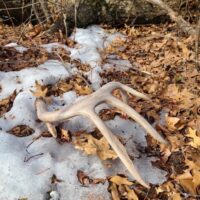
I do not have the sharp-eyed vision to spot an arrowhead or ancient button or the head of an axe on a Boundary Waters portage or campsite. Animal bones, and I assume most, if not all of them, are of recent expiration dates, and are usually what I stumble upon. An atlas vertebra from a moose was a highlight, as were various shed antlers from the big fellas. But that’s about it.
Recently, I picked up a piece of flint from a river in central Minnesota that looked as if it had been chiseled to fit an ancient hand. Professional diggers would call this lithic debris. But its shape could have been shaped by the forces of nature. However, the stone caused me to ask: What is the proper procedure if a canoe camper in a federal wilderness area discovers an artifact?
Lee Johnson, an archeologist with the U.S. Forest Service in Duluth, supplied me with a helpful answer. The short answer is “leave it be.”
The alert camper is advised to take a photograph of the artifact in situ or mark it as a point on the GPS, then notify the local district ranger. The ranger will contact an archeologist to take it from there.
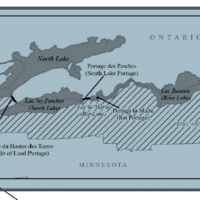
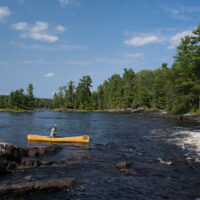
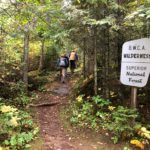
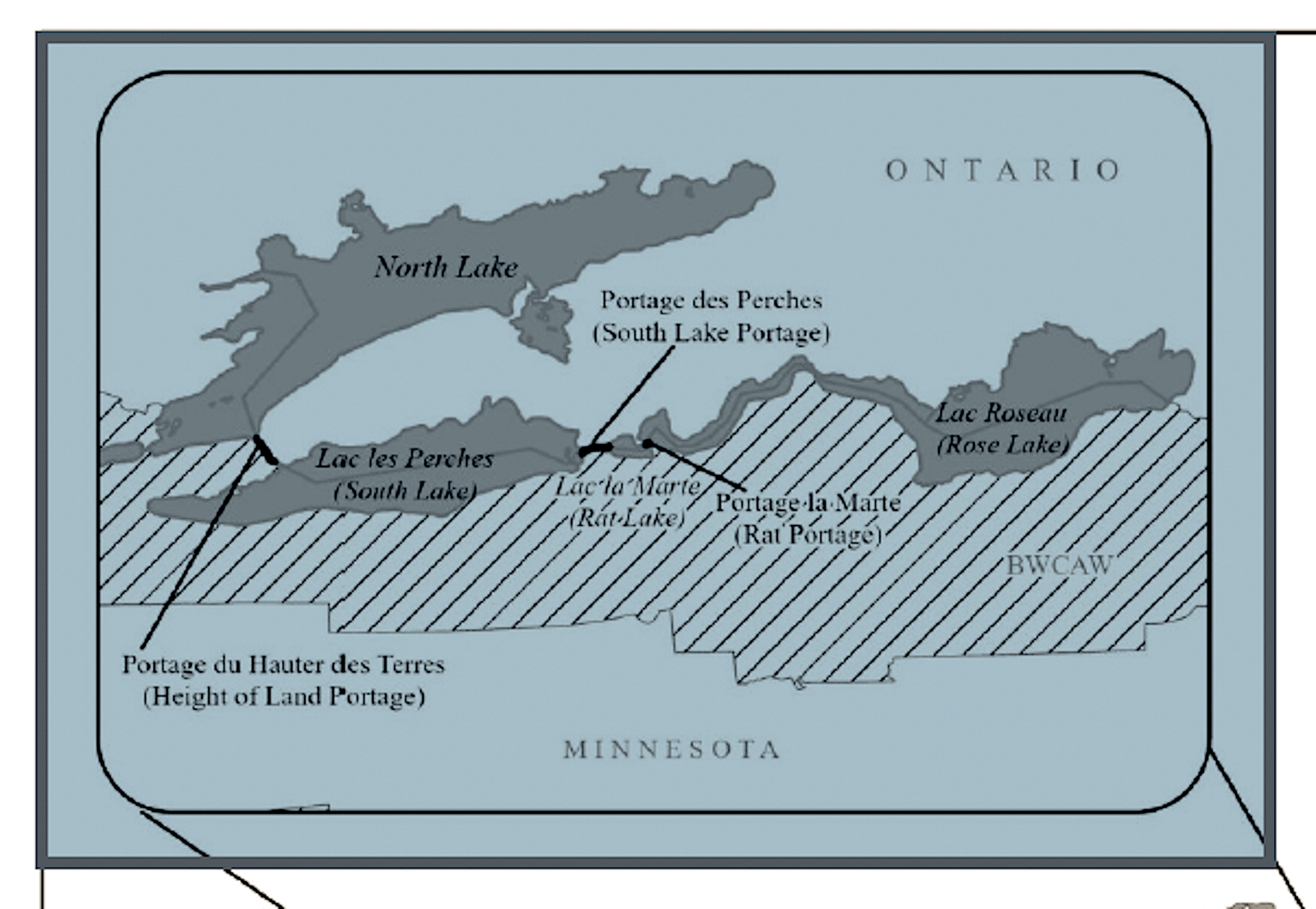
Johnson has more experience than most. His work on the portage to and from Rat Lake, which connects at the east end of Rose Lake on the Voyageurs Highway, was published in 2024 by The Minnesota Archeologist. The Rat Portage, or Portage la Marte [martin] to the voyageur, is what’s known as a short-haul portage. On today’s maps, it is only between four and eight rods long. As such, the path can be considered a “lift-over” portage, by which a canoe can be carried by one person at each end, rather than flipped to a single set of shoulders under a yoke. The route was heavily used by the original inhabitants and further trodden by the voyageurs on a main route from Rainy Lake to the trading post at Grand Portage on Lake Superior.
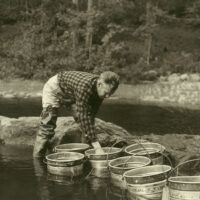
With this much historical traffic – sometimes small settlements were established near the important portages – comes the opportunity to find what those past travelers left behind. Johnson and his predecessors turned up a variety of objects on Rat Portage, including a pipe stem, a pipe bowl fragment, a lithic (stone) drill, buttons, a musket ball, a shoe buckle, hand-made nails, a plated spoon, and a piece of an old kettle, among other things. A setting pole shoe, which fits on the bottom of a long rod (called a perche by the French) used to shove a canoe through shallow water, was also found. All this on a portage barely 70 feet long.
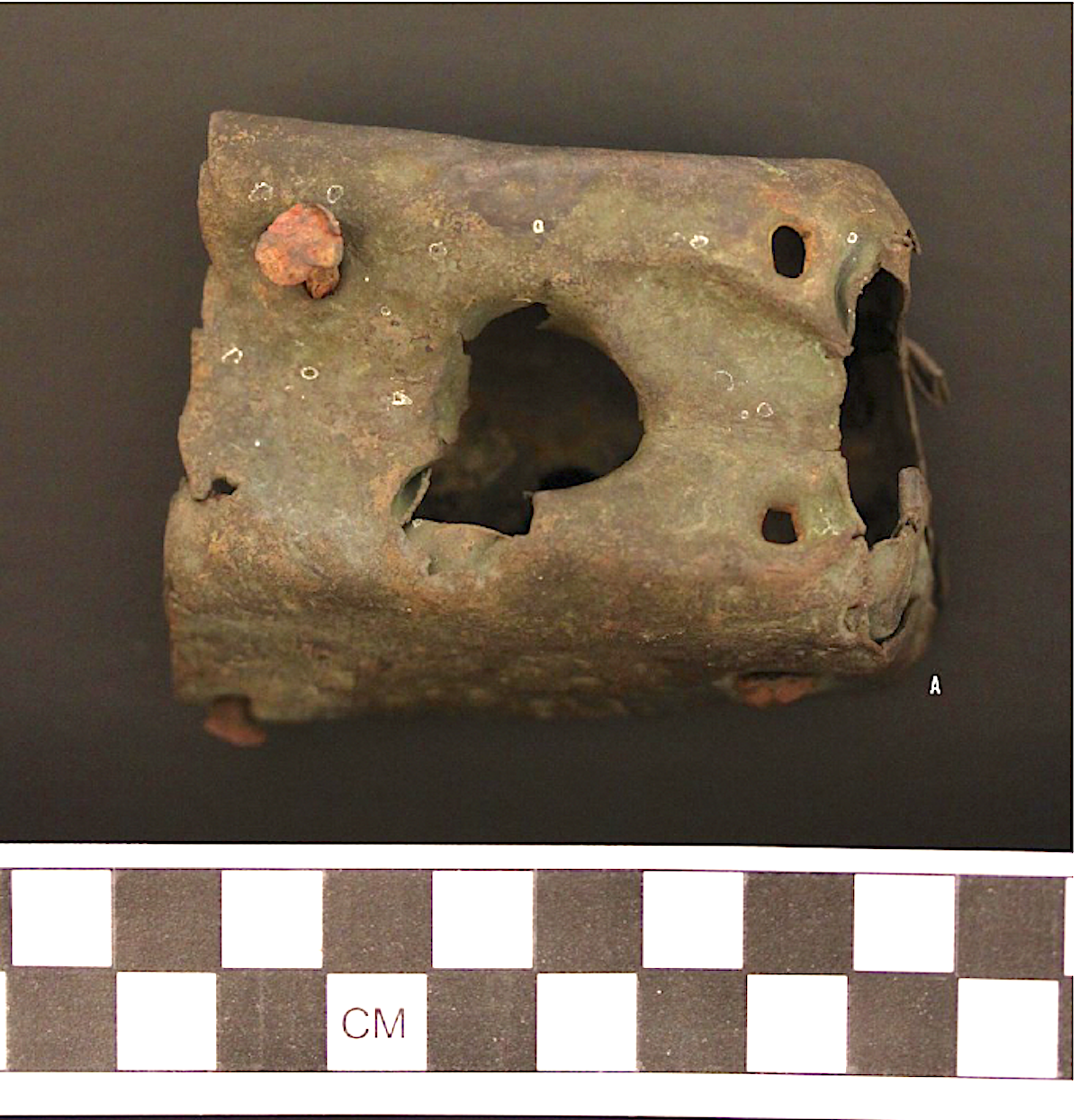
The use of metal detectors by professional archeologists, once considered a breach of professional ethics, today helps with the discovery of some of these items. More modern debris (foil, wire) also turns up, of course. But there is no substitute for a small shovel and dirty knees.
Johnson and his colleagues surmised that Rat Portage was a way station – a place to take a load off (literally), sit, have a smoke, and cook a meal. Underscoring their importance as an historic transportation route, four major portages, including the seven-mile Grand Portage out of the community of the same name, are listed on the National Register of Historic Places.
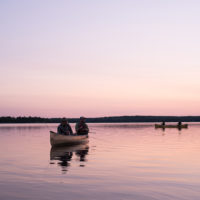
Next time you are sitting on a designated site on a windy point, recall that there is a high likelihood that a camp has existed there for more than 2,000 years. The Woodlands people of the year 1000 AD wanted to keep the mosquitoes away just as much as we do. As did the Ojibwe, the Cree, the Dakota, the voyageurs, and British soldiers. But, even with all that human activity throughout the BWCA, I have never discovered so much as an iron nail. Wrigley Spearmint Gum wrappers, yes. Canadian Mountie brass buttons, no.
Johnson stressed the importance of protecting and stewarding cultural resources on public land. “Many artifacts from the Boundary Waters and other public lands have been looted, collected without permit, or have otherwise walked away with visitors,” he said. “These items are irreplaceable pieces of our shared heritage, and important that they be left in place.”
To quote Winston Churchill, who I doubt was ever in a canoe but was wise nonetheless: “The farther backward you can look, the farther forward you are likely to see.”
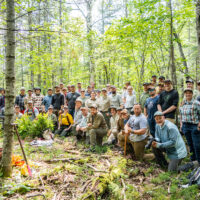
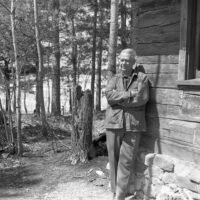
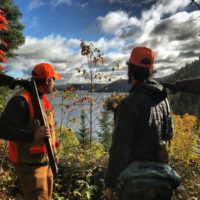
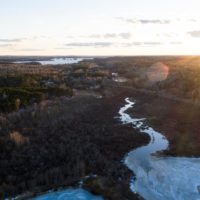
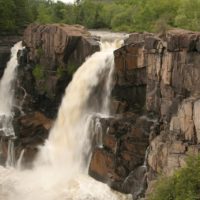
Photos by Lee Johnson and the Duluth U.S. Forest Service
Editor’s note: SFBW board vice-chair Mark Neuzil writes a weekly Substack on what he calls “the small things in nature.” As a long-time BWCA tripper and a former guide, his essays often relate to canoe country. Subscribing can happen here, and it is free.