

So what does the executive order from MN Governor Walz mean for the Boundary Waters?
August 19, 2026 3:30 pmOn August 18th, MN Governor Tim Walz issued an Executive Order adding critical protections for the Rainy River Headwaters Watershed—the network of rivers and lakes that flows through and feeds the Boundary Waters Canoe Area Wilderness.
The order effectively closes the door on new sulfide-ore copper mining in the watershed using the tools currently available to the state, while creating a path toward making these protections permanent.
This action comes after Congress voted in April to roll back federal protections for the watershed, reopening the door to advance plans for a copper-nickel mine within the Boundary Waters watershed.
What does this executive order actually do?
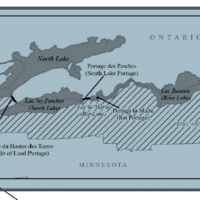
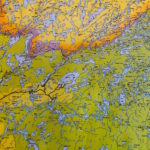
The action taken by the Governor focuses specifically on the Rainy River Watershed, which encompasses the entire Boundary Waters. Below is a summary of those actions which effectively;
*Freezes state environmental review and permitting by the Minnesota Department of Natural Resources and the Minnesota Pollution Agency for any new sulfide-ore copper mining proposals in the watershed, until a pending legal challenge (See below) to the state’s own outdated mining rules is fully resolved and subsequent rulemaking more protective of the Boundary Waters is completed.
*Cuts off state cooperation with any federal environmental review of any sulfide-ore mine proposals in the watershed. The state will not help advance sulfide-ore copper mining in the Boundary Waters watershed.
*Stops new state mineral leases in the watershed, closing the door on new projects getting a foothold.
*Stops new state surface leases for sulfide-ore copper mining activities, including for disposal or storage of tailings or other waste materials, in the watershed.
*Puts every existing state lease in the watershed under review, directing agencies to strictly scrutinize state sulfide-ore copper mining leases in the watershed and to enforce compliance with lease terms to the fullest extent the law allows.
*Directs the Minnesota Department of Natural Resources to draft legislation to permanently ban sulfide-ore copper mining in the watershed for the Minnesota Legislature to take up in 2027.
The executive order states the following details about the ongoing litigation;
“On April 10, 2026, after an administrative process which included expert testimony, a hearing, and a recommendation from an Administrative Law Judge, the Minnesota Department of Natural Resources (“DNR”) issued a final order that found “Minnesota Rule 6132.2000 is inadequate to protect the BWCAW from pollution, impairment, or destruction associated with noise and light impacts arising from nonferrous metallic mineral mining in the RRH [Rainy River Headwaters] watershed.” To address that concern, the DNR concluded it would initiate a rulemaking proceeding to amend its rule or promulgate a new rule “to sufficiently protect the BWCAW from noise and light pollution.”
How did we get here?
On Thursday, April 16th, the United States Senate voted to pass H.J. Resolution 140. 50-49. Despite months of emails and phone calls and a massive, concerted effort by Sportsmen for the Boundary Waters and partner organizations from around the country.
Using the Congressional Review Act (CRA), this bill rescinds Public Land Order (PLO) 7917 – the 20-year mineral withdrawal of roughly 225,000 acres in Superior National Forest, within the Rainy River Watershed that was set in place by then-Secretary of the Interior Deb Haaland.
One caveat of using the CRA in this fashion is that no future administration can re-implement the same withdrawal. This sets a dangerous precedent for public lands everywhere. The decision bars the Department of the Interior from issuing similar protections in the future without new Congressional authorization.
The passage of HJ Res. 140 does not give Twin Metals, the company proposing a copper-nickel mine upstream from the Boundary Waters, permission to break ground. Additionally, this legislation does not necessarily fast-track permitting, guarantee eventual permits, or even return leases. That being said, the removal of the mineral withdrawal opens the door to renewing Twin Metals’ federal leases.
If Twin Metals has its federal mining leases returned, the company will have to submit a Mine Plan of Operations (MPO) and begin the permitting process with the Bureau of Land Management (BLM), the United States Forest Service (USFS), and the state of Minnesota.
Minnesota’s Department of Natural Resources (DNR) is the primary regulator for mining in the state. Even if federal leases are issued, a mine cannot be built without state permits. Additional state permits and approvals are issued by Minnesota agencies, such as the Minnesota Pollution Control Agency, and include permits for water discharge, wetlands, dam safety, and air.
The executive order is a direct response to Congress’s abuse of the Congressional Review Act to overturn the hard-fought 20-year protections, using the tools at his disposal to stop new copper-nickel mining in the Boundary Waters watershed.
The executive order issued by Governor Walz effectively bars state agencies from participating in the state-level permitting and review process for Twin Metals’ proposed project, creating a significant roadblock to the project’s advancement.
So now what?
We dig our heels in. This executive order creates a path towards permanent protection for the Boundary Waters. Though it’s important to identify that this executive order is not law and can expire or be undone by a future state administration without a legislative vote. Our next governor must also uphold the protections established by this executive order.
The final decision in the ongoing litigation over MN mining rules and rulemaking mentioned above will also guide future decisions on proposed mining projects. The MN DNR must also review all existing state mineral leases and determine a final outcome, which does not automatically require cancellation.
Most importantly, we must work collectively to pass permanent state protection legislation. The executive order directs the MN DNR to draft legislation that would ban copper-nickel mining in the Rainy River Watershed and to work with the state legislature to secure its passage.
Our path forward is clear. Public lands and waters belong to us all. Our priceless backcountry spaces, like the Boundary Waters, are no exception. As hunters, anglers, and outdoors enthusiasts who care deeply about this issue, we must recognize that we are at a critical crossroads for the Boundary Waters, and work together to make permanent protection a reality for future generations.